
WhatsApp Tightens Stranger Messages: How Marketing Teams Can Adapt
1. WhatsApp Is Tightening the Stranger-Message Channel
Recently, sales teams and cross-border community operators have noticed a clear shift: WhatsApp's control over "stranger messages" is getting much stronger. This isn't a one-off minor update — it's a series of moves throughout 2026: message request folders, monthly limits on stranger messages, strict account settings, plus the username system launched at the end of June. The direction is unmistakable: make unsolicited one-way outreach harder, and reward genuine two-way conversations.
For teams that rely on WhatsApp for lead generation, community operations, and customer support, this hits the most critical part of the funnel: how you get that first message to someone who doesn't know you yet.
2. What Exactly Changed?
When you look at the recent updates together, the logic becomes clear.
2.1 Message Request Folder (Who Can Message Me)
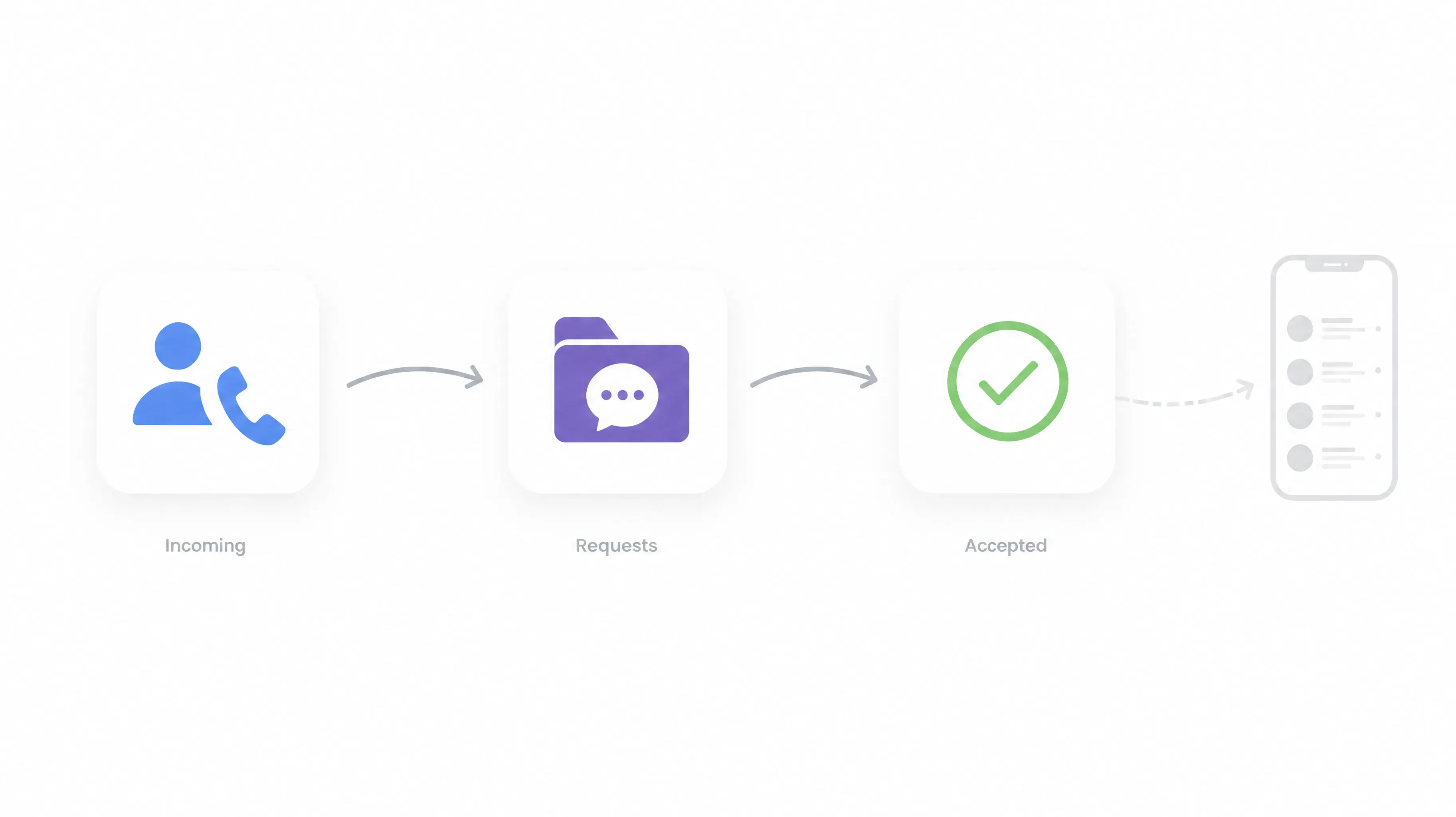
WhatsApp is testing a privacy setting called "Who Can Message Me." The default is "Everyone," meaning anyone can message you directly in your main chat list. Once switched to My Contacts, messages from numbers not saved in the recipient's phone contacts are automatically moved to a separate folder called Requests — similar to Instagram's message requests.
What this means: strangers can still send messages, but they won't appear directly in the main chat list. The recipient has to open the Requests folder, view the message, and decide whether to reply. Only after a reply does the conversation move back to the main list. For users, this is anti-harassment protection. For senders, it's an extra interception layer before any message ever gets seen.
2.2 Stranger-Message Monthly Limit (Pilot in Multiple Markets)
The more significant change is that WhatsApp is testing a monthly limit on stranger messages in India and other markets. Cold messages you send to contacts who "haven't saved your number and have never replied" count toward a monthly quota. As you approach the limit, the app shows a warning. Once you exceed it, you temporarily can't start new cold conversations with unresponsive strangers.
As soon as the recipient replies, the conversation becomes "active" and stops counting against the quota. Essentially, WhatsApp is rewarding two-way interaction and penalizing one-way broadcasting. This hits teams that rely on "spray and pray" outreach the hardest.
2.3 Strict Account Settings
The strict mode introduced in early 2026 cranks stranger restrictions to the maximum: auto-blocking attachments and media from numbers outside contacts, silencing unknown calls, disabling link previews, and limiting who can add you to groups. While optional, it signals that the platform is systematically upgrading defenses against unknown sources.
2.4 Username System (Hide Your Number, but the Two-Way Bar Remains)
The username feature launched at the end of June lets users be found without exposing their phone numbers. That makes first contact more private, but it doesn't lower the requirement for genuine interaction — usernames just change how identities are discovered; cold-message quotas and request-folder mechanics still apply.
3. What Does This Mean for Marketing and Sales Teams?
Translate these changes into business language, and the impact is direct:
- Cold broadcasting is getting much harder: Sending promotions to large numbers of strangers will burn through the monthly quota quickly and can lead to temporary send bans.
- "Save my contact first" becomes a hidden barrier: Under My Contacts mode, stranger messages are isolated in Requests, hurting both delivery visibility and reply rates.
- Account weight and interaction quality matter more: The system increasingly cares about "did the other person reach out to you first, and did they reply" — exactly the logic behind passive warm-up.
- Environment stability is still the foundation: Regardless of rule changes, shared IPs, frequent device switching, and fingerprint linkage remain high-risk signals.
In other words, the new rules don't ban outreach — they require you to be qualified to send, based on real contacts and healthy account weight.
4. How to Operate Safely Under the New Rules
A few practical recommendations:
- Move acquisition action before the "save contact" step: Use website forms, landing pages, and event QR codes so users actively opt in and add you, rather than you blasting them one-way.
- Prioritize existing contacts and engaged conversations: Focus on people who have already replied or interacted — those messages aren't quota-limited.
- Build account trust through passive warm-up: Let new accounts receive inbound activity from real, established accounts first to accumulate weight before entering send-ready stage.
- Isolate multi-account environments: One account = one IP = one fingerprint, so a restriction on one account doesn't cascade through the whole matrix.
This is why more teams are turning to tools like WAWarmer.
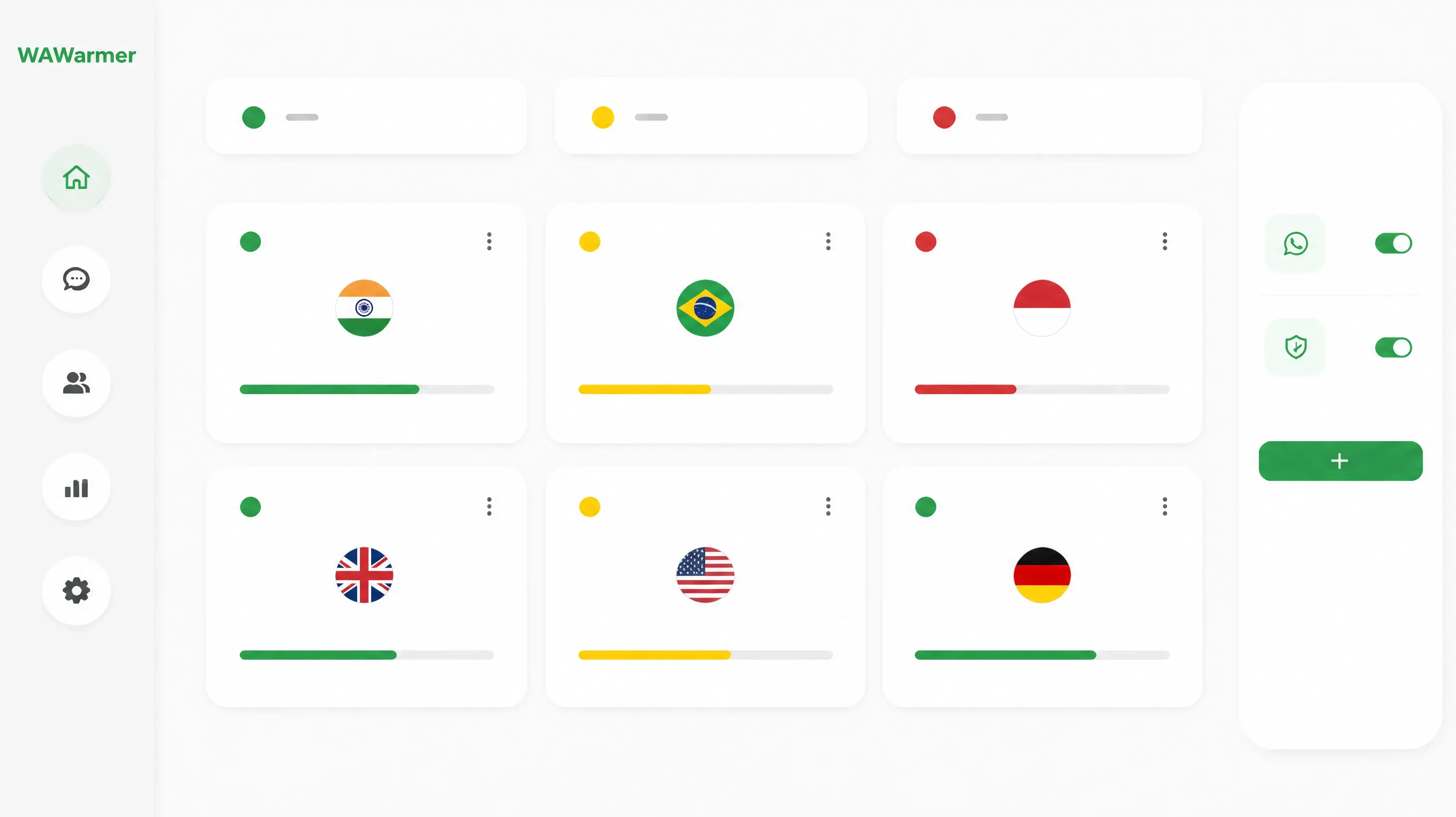
WAWarmer is a tool designed for secure WhatsApp multi-account management, offering isolated fingerprint environments, batch proxy configuration, and automated warm-up to help teams reduce ban risks. Under the new stranger-message restrictions, its core value is:
- Dedicated Window Proxy — each account has its own IP, avoiding shared-proxy contamination
- Unique Device Fingerprint — every account runs in a fully isolated environment
- Batch Proxy Import — efficiently configure environments for large numbers of accounts
- Automated Warm-up Engine — new accounts complete passive warm-up on schedule to build initial weight
- Unified Multi-Account Management — monitor all account health in one place
Summary
The core signal of this round of WhatsApp updates is simple: the cost of one-way stranger outreach is rising systematically, while the value of genuine two-way interaction is rising just as fast. For teams, instead of looking for loopholes, the smarter play is to build solid infrastructure — clean account environments, real contact relationships, and healthy warm-up rhythms — because that's the real foundation of long-term stable operations.
Try WAWarmer and build a safe, scalable WhatsApp multi-account operating system for your business under the new rules.
WhatsApp Bulk Sending Safety Guide: Why Passive Warm-Up Comes First
Learn WhatsApp bulk sending safety rules and risk boundaries. Discover why passive warm-up is the essential prerequisite for safe broadcast messaging and how to build a compliant sending workflow.
Send Me WhatsApp Message: wa.me Links, Chat Buttons and Safe Passive Warm-Up
Create a send me WhatsApp message (wa.me) link, add a WhatsApp chat button to your website, and use passive reception to warm up new numbers without getting banned.